
Writer
Office & Resource Manager

The retailer's legacy platform suffered from slow server response times, rigid template constraints, and a fragile database structure that frequently crashed during high-traffic sneaker drops. Managing extensive variants like sizes, colors, and stock levels across multiple locations was inefficient, resulting in inventory desynchronization, severe mobile layout layouts, and frustrated customers abandoning their carts.
The architectural overhaul began with a comprehensive data migration strategy to securely extract, clean, and map thousands of product SKUs, historical customer accounts, and years of complex order data. Utilizing automated scripts and custom API pipelines, we transferred the entire footprint into Shopify’s architecture without altering existing canonical URLs, thereby maintaining SEO authority and avoiding broken links. To resolve previous inventory issues, we integrated real-time multi-location tracking directly within the dashboard.
On the frontend, we developed a highly responsive, custom Shopify theme built specifically for mobile commerce. We replaced heavy third-party plugins with native Shopify Liquid logic and optimized script execution to minimize time-to-interactive metrics. Advanced, dynamic multi-layer collection filtering was introduced to allow effortless discovery of sneaker models by size, color, and availability. Finally, the checkout flow was streamlined down to a single-page layout, drastically reducing friction points.
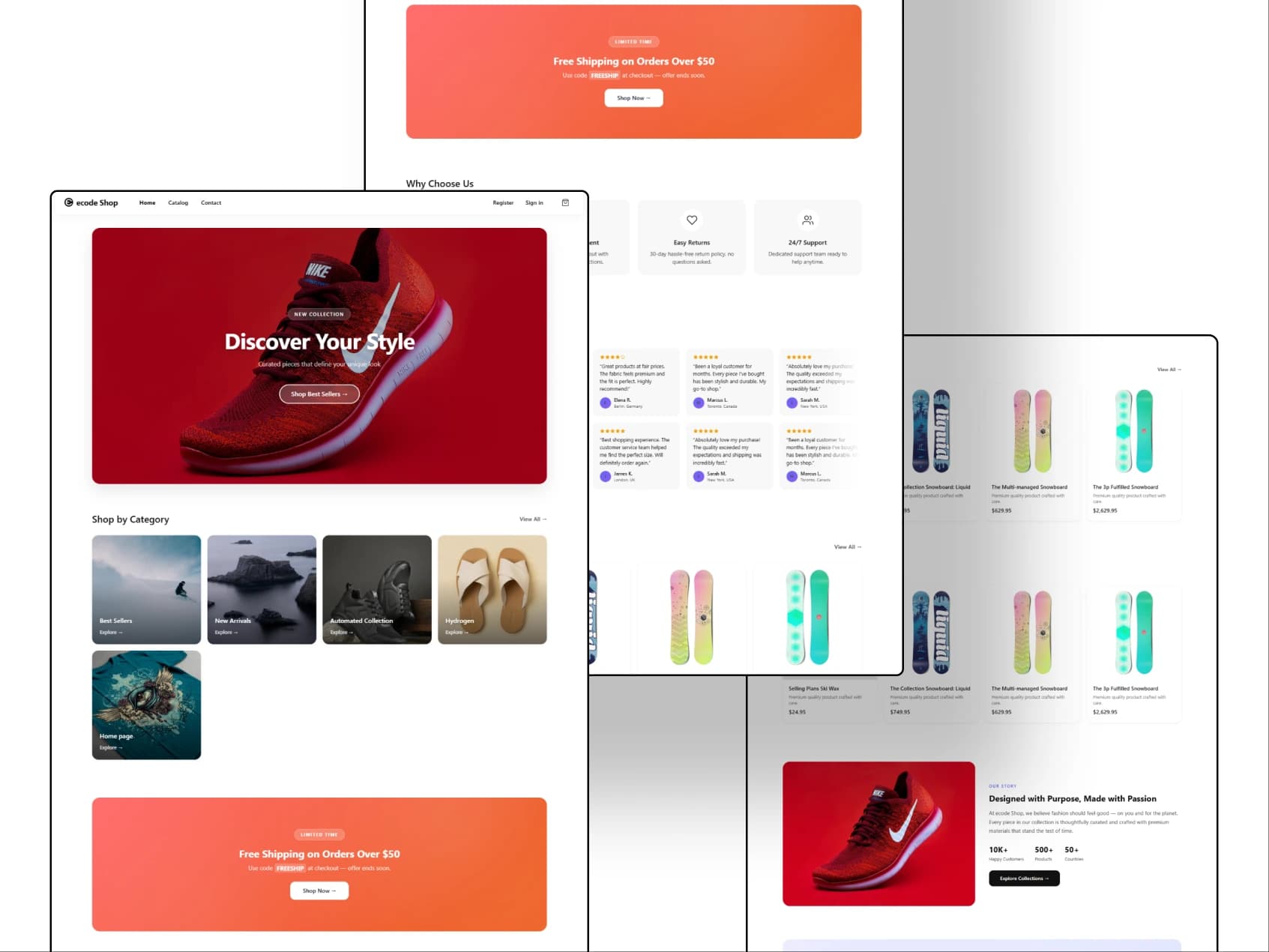
This case study is part of our Shopify Migration service offering.
Migrate your store to Shopify without sacrificing search rankings or disrupting business operations. We securely transfer products, customers, orders, content, and SEO assets while preserving site structure, redirects, and search engine visibility throughout the migration process.